


My Exciting Journey: Building the Perfect Home Recording Booth for Voice Overs - Part Two (Materials)
- Alexander Evley
- Jun 4, 2025
- 6 min read

Hello and welcome to Part Two of my blog series on building the perfect home recording booth!
In this post I'm going to explain my thinking and research processes to decide what materials will be required for making my home recording booth efficient for professional standard voice overs.
A lot of my information and research has come from the knowledgeable Jim Prior over on Youtube at 'Soundproofing with Jim Prior'. I've been following ideas from his video DIY Soundproofing for Noisy Neighbours to get an understanding of what different range of materials there are to use for soundproofing.
Firstly, I feel like I should tell you some basic information. This is a room that is approximately 260cm x 150cm, with parts of the wall jutting out in places and a cupboard on the edge that's approximately 50cm x 260cm. The wall that divides the cupboard from the room is a hollow wall with studs and plasterboard that is approximately 12.5mm thick. No insulation in the middle whatsoever. This is creating a massive echo as the sound bounces around inside it. The ceiling slopes and sounds like it's just a layer of either MDF or plasterboard which makes me think I could knock my way out of the roof if I'm not careful.
My list of alternative materials so far (available in the UK) include:
MDF
Sound Acoustic Plasterboard
Rock Wool
Sand Board
M20 Rubber Mat
Anti Vibration Mat
2 x 2 Batten
Foam Tiles
This list will be updated as I go along so they are all in one place.
So what are the potential uses for these materials? Let me tell you!
MDF
The MDF being considered is only 6mm thickness, mostly for space reasons. My room space that I have to work with is considerably small for a "room". There's a reason it has been our storage space for so many years, it's hard to use the room as anything else! The floor space is approximately 3.5m² with a sloped ceiling from standing to ducking height. I will also be adding other material layers to this MDF which will add to the wall thickness. The MDF is likely to only be considered as a layer on the walls, but there is also potential for it to layer the floor and/or ceiling depending what structural issues I come across. If this becomes the case, then I will likely be using thicker MDF for the flooring just so I know it will support my heavy weight along with a desk and lots of equipment.

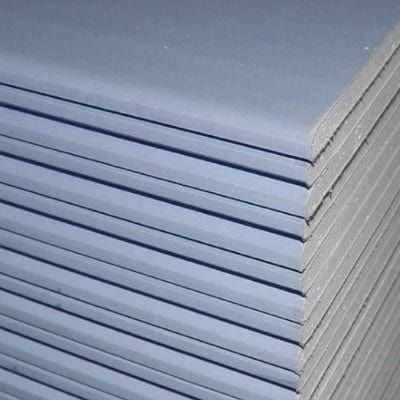
Sound Acoustic Plasterboard
Did you know this was a thing? I certainly didn't until I started this research, and I've been a musician for 20ish years. Had I known this was a thing when I first started recording my own music, it probably could have sounded a lot better! I'm currently looking at the 12.5mm thickness instead of the 15mm thickness as I'd potentially like to double up on them, as suggested by another studio building blog I read (but cannot remember or find right this second to add their link here...), and 25mm is quite a difference to 30mm thickness when you haven't got the room to spare. However, if i find I only need one single layer of these panels then I will likely go for the 15mm just for that extra bit of thickness.
This can currently be bought for around £16-£19 per 2400mm x 1200mm panel, and I'd likely only need 5 or 6 (for single layer) maximum due to their size!
Rock Wool
Rock Wool has been suggested multiple times on multiple sites and I can see why. With a fairly good rating for absorbing sound waves and improving acoustics, it appears to be efficient in making spaces quieter and less prone to echoes, which is exactly what I need! However, it's quite pricey for the amount I would need to buy to cover all the walls.
I'm lucky to have a free option. I'm not saying it's going to be a good option, but it's an option.
Do you have dogs? If so, what food do you buy them? We use Butternut Box for our pups because it genuinely is human-quality ingredients. That's not to say I'd want to eat it, but should an apocalypse come...well...it wouldn't be the worst thing in the world. But I digress. Butternut boxes deliver the food fresh, which requires it to stay cold for transportation until it can be put away. In order to keep the food cold it comes with recyclable ice blocks as well as wool. Sheep's wool to be exact. They call it WoolCool which is also recyclable and environmentally friendly, as well as compostable, 100% natural and sustainable. I was initially concerned as it states compostable but they also suggest it can be used to wrap pipes and knit clothes so it can't be the quickest break down...
But my plan is to fill the walls with the wool we've collected over the years from this company. It may not be as good as Rock Wool but it's wool, and it will layer nicely in the wall.

Sand Board
I'm going to be honest, I had no clue this existed at all. So, what is it?
According to soundstop.co.uk, a Sand Board is made up of advanced acoustic insulation panels which is made from a combination of cross-fluted engineered card and hardboard which is filled with finely compacted quartz sand.
What kind of noise do these boards stop?
These boards are highly effective at blocking both airborne noise such as voices (big plus), TV sounds and music, as well as impact noise such as footsteps, furniture movement and vibrations.
These are all things that are a massive problem in my home due to the amount of animals running around, barking, and meowing, so I'm hoping this will do A LOT of the sound proofing for me.
These come in 10mm or 15mm widths and I believe that this is where I want to use up my space that I don't have! Just don't forget that if you need to trim these down, you're going to need the sealing tape in order to stop all the sand falling out!

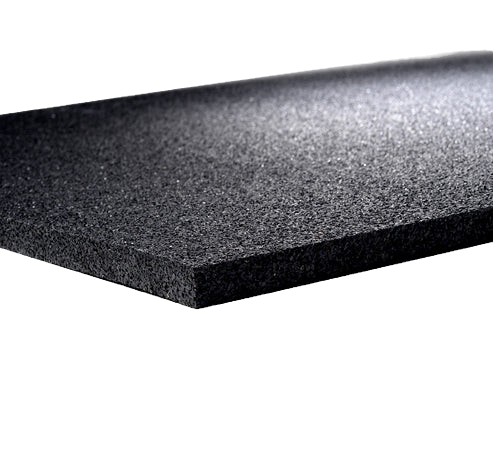
M20 Rubber Panels
Another pricey option that I'm not sure if I'm going to use, and if I do use them, I have a feeling it's going to be more for the flooring to dampen some of the creaking etc.
These come in a generalised thickness of 20mm and in 1m x 1m squares, so they're not the biggest, meaning you're going to need more! And if you need them to stick to the walls you're going to need some very strong spray adhesive to keep them up as they're not light either. It's all extra costs. But I'm weighing up the pros and cons of using them as they do appear to dampen a lot of sound!
Anti-Vibration Mats and Battens
These are more for if I have to build a floating room within the room because the structure will struggle to support my building into the current walls, or if I need detached walls to stop reverberation...Anti-vibration mats will be placed between the current walls and the battens in order to stop the vibrations passing through from one structure to another, effectively dampening the sounds within the room.
However, building a whole new structure in the room will remove even more space that I don't have, making it EXTRA cosy, and will likely be a lot more costly!
Foam Tiles
You should all know what these are if you've ever seen a video of celebrities recording their music in studios, or even watching your favourite Youtubers/streamers as they likely have some of these on their walls. This doesn't soundproof a room, a common misconception a lot of people seem to have, but changes the acoustics to stop the sounds and vibrations reflecting off of hard surfaces straight back at you. Very handy if you've got lots of wall space that will bounce sounds and quite cost effective too.

I'll keep this updated as I go, but this is as far as I've gotten today with my research for which materials to use to soundproof the room and improve acoustic sounds.


Comments